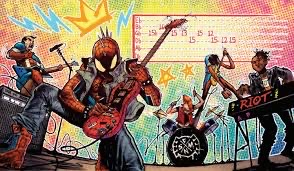
SPIDER-PUNK: ARMS RACE (2024) #1 artwork by Justin Mason and Morry Hollowell, Marvel.com
Punk rock music was largely created by young people who felt removed from mainstream culture and the music industry. In the United States during the 1970s, many of these musicians came from middle-class and suburban backgrounds and often are Bohemians in art school, not just working-class youth. American punk often emerged as a response to boredom, dissatisfaction with suburban life, and a perceived lack of authenticity in popular music, in contrast to frustration towards the economic crisis and the high unemployment rate of the working-class youth in the United Kingdom. Many musicians also rejected mainstream rock for being overly polished and commercialized. Broader social and economic conditions, including limited opportunities and a general sense of alienation, further intensified these feelings.
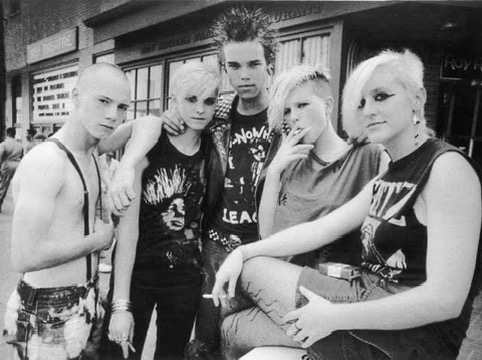
Hardcore punks at the Georgetown Roy Rogers fast-food restaurant snub their noses at the nouveau chic invading their turf in Washington, 1985, Getty Images.
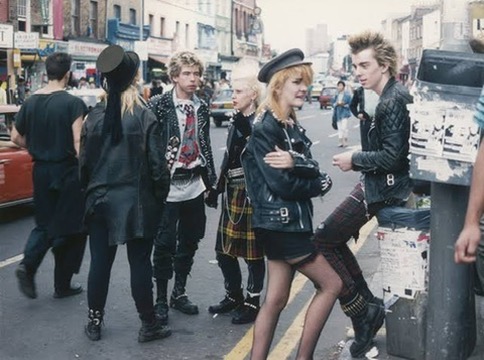
A group of young people with punk hairstyles and fashion, including leather jackets and studded belts, gathers on the King’s Road in Chelsea, London, in 1983, at the Museum of Youth.
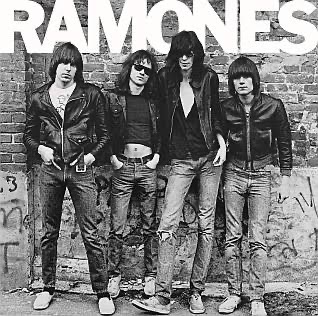
The Ramones in a rarely seen image, 1976. From left, Johnny, Tommy, Joey, and Dee Dee. Roberta Bayley, The New York Times.
Most punk musicians were not professionally trained or part of the mainstream industry. Instead, they were ordinary people—teenagers, artists, and outsiders, who embraced a do-it-yourself (DIY) approach, creating their own music, shows, and identities outside the major corporations they disavowed. Their music reflected this ethos through fast tempos, simple structures, and raw, aggressive energy. Early punk scenes emerged in cities like New York City, especially in small venues such as CBGB, where bands like the Ramones and Blondie developed their sound and built a following. However, punk was not limited to one location; it spread to cities such as Los Angeles, Detroit, and Washington, D.C., where distinct local styles and scenes emerged.
Punk musicians came from a range of backgrounds and identities. While many early artists were white and male, women and minority musicians played a key role in shaping the movement. For example, The Raincoats challenged traditional gender roles in music, while artists like Death brought a distinct sound and political edge to punk. This shows that punk was never limited to a single group, but instead brought together people who felt like outsiders in different ways.
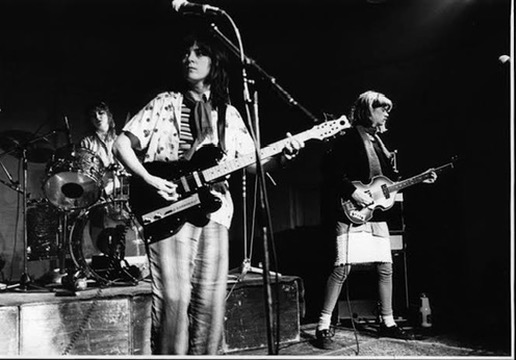
The Raincoats in 1981. Photo By Peter Cox
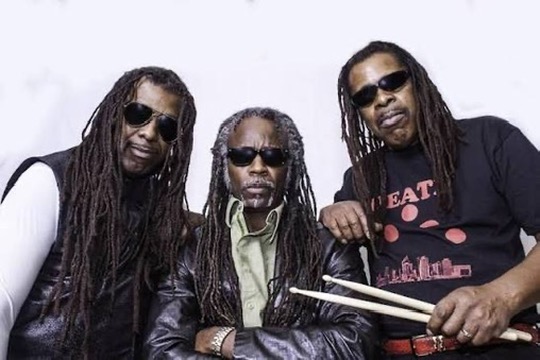
The surviving members of the Detroit proto-punk band Death, Rollingstone.
Overall, punk music was created by often marginalized or dissatisfied youth from both urban and suburban environments who wanted to make something raw and independent. Although they came from different backgrounds, they were united by a shared interest in rejecting a culture and values that did not appear open to them, unapologetically expressing their identity through alternative music.

